Indian Independence and the Freedom Fighters You Never Learned About in School
In 1829, the Khasi hills went to war with the British. It began with what is now called the Nongkhlaw Massacre, the spark of the First Anglo-Khasi War.
U Tirot Sing, the Syiem (chief) of Nongkhlaw, had let the British build a road through his land, and it was not his decision alone. He put the proposal before his dorbar, the council of the state, which weighed it for two days before agreeing. The terms were clear. The British would get their road linking Guwahati to Sylhet through the hills. In return, Tirot Sing would get back the duars, the trade passes into the Assam plains that the British had closed to his people, along with free trade on the new road and a promise that Nongkhlaw’s own affairs stayed its own.
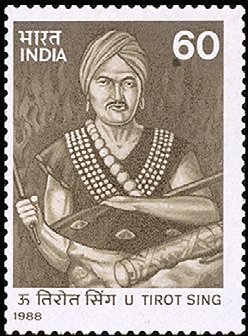

The British broke the deal. When a rival raja disputed Tirot Sing’s claim to the duars, British sepoys blocked his men instead of backing him. The road brought in soldiers and labourers from outside the hills, and accounts from the time describe food and goods taken without payment, peasants and woodcutters harassed, local workers ill-treated, and talk of taxes once the road was done. Fear spread through Nongkhlaw. The dorbar met again and told the British to leave. They did not.
So he decided to break the road.
His warriors came down on Nongkhlaw one April morning. The two British officers posted there did not survive.
But the man the attack was really meant for was not there. David Scott, the East India Company agent who made the deal and broke it, had left for Sohra just the day before. The British records call it chance. The hills tell it another way. In the old stories, a warning reached Scott before the warriors did, tipped from inside the Syiem’s own household. Some tell it was his own mother.
Tirot Sing fought on for four more years. Bows and swords against guns. Caves against siege. Taken prisoner in 1833, he died in Dhaka in 1835, far from his hills. He gave his freedom and his life so his people would not lose theirs. One of the earliest martyrs of India’s fight against the British, long before the word independence became a movement.
He was not alone in these hills.
In 1862, U Kiang Nangbah led the Jaintias against British taxes and interference in their faith. He was hanged in public at Jowai. At the gallows, he told his people to watch his face. If it turned east in death, India would be free within a hundred years. The elders say it turned east. Eighty-five years later, the British left.
In the Garo hills, Pa Togan Sangma led his warriors against British guns carrying spears and shields of plantain stem, believing the thick stems would stop bullets. They did not. He fell at Chisobibra defending his land, and every December 12 the Garo hills remember him.
You can read about their stories in Immortal Martyrs, Government of Meghalaya, Official State Portal.
And this is just one state. Do you know the others?
- Kanaklata Barua of Assam, shot at seventeen for carrying a flag.
- Bir Tikendrajit of Manipur, hanged in public at Imphal.
- Rani Gaidinliu of the Naga hills, who took up the fight as a teenager and spent fourteen years in British jails.
To name just a few.
You may not find most of them in the history books at school. You find them the way I did, in the second language literature books, Khasi in my case, and from the oral stories the locals still tell.
Happy Independence Day.